F216
F216


The metrics look strong. Registrations are up. Attendance holds. Satisfaction scores clear the benchmark. Then comes the CFO question that freezes the room. Which registrations turned into customers? Sales checks the CRM. Marketing scans reports. No one can answer with confidence. This is where event budgets lose momentum.
The problem is not execution. It is disconnected event data that never fully moves through the funnel. Registration details, engagement signals, and sales activity live in separate systems, making events difficult to measure and harder to monetize.
Effective event data management fixes that gap. When registration, engagement and attendance data stay connected, events start influencing pipeline and revenue decisions. This blog shows how to capture, automate, and activate event data across the funnel, so you can optimize decisions at every stage, from first touch to revenue.
What Is Event Data?
Event data is the complete, structured record of how an attendee interacts with your event across time, channels, and systems. It captures activity with enough context to support decisions, not just report numbers. In practice, event data is the connective tissue between marketing qualification and sales execution, translating engagement into funnel movement.
Core Components of Event Data
For event data to hold up in a revenue conversation, it needs more than volume. It needs structure. Every usable event data point relies on a few non-negotiables.
Time
Every interaction needs a precise timestamp. Timing establishes sequence, momentum, and buying signals. Without it, you cannot determine cause and effect or when action should follow.
Identity
Each interaction must tie back to a real person and, where relevant, a real account. Identity is what turns activity into pipeline context and makes attribution defensible.
Verified Action
The data must represent a confirmed action, not inferred behavior. Registrations, check-ins, session attendance, scans, and confirmed clicks remove assumptions and replace it with proof.
Context
Every action needs context. Source, session, channel, and location explain why the interaction matters and how it fits into the broader buying journey.
When these four components are present, event data can move cleanly through marketing, sales, and revenue reporting without manual cleanup or interpretation.
Types of Event Data
There are five core types of event data, each aligned to a stage of the attendee journey and a corresponding decision point in the sales and marketing funnel. Viewed together, these data types form a clear progression that guides whom marketing should prioritize and when sales should engage.
Stage 1: Registration Signals
Registration data establishes audience quality and revenue potential at the first touch. Demographics, firmographics, and custom fields reveal ICP alignment, buying authority, and account relevance. This data shapes early prioritization and sets the foundation for accurate pipeline expectations.
Stage 2: Pre-Event Engagement
Pre-event engagement data shows commitment after registration but before event day. Email opens, RSVPs, and content downloads indicate which registrants invest time and attention early. These signals separate passive signups from active prospects and guide where pre-event energy delivers the highest return.
Stage 3: Live Behavior Tracking
Live behavior data reflects real intent during the event. Session attendance, booth visits, and chat activity expose topic interest, solution fit, and interaction depth. This data highlights who advances from interest to consideration and supports timely sales conversations.
Stage 4: Post-Event Interactions
Post-event interaction data measures momentum after the event closes. Replay views, survey responses, and follow-up clicks show continued engagement and buying progression. These signals sustain funnel movement and reinforce long-term opportunity development.
Stage 5: Revenue Attribution
Revenue attribution data connects event participation to financial impact. Opportunity influence, deal progression, and closed-won revenue confirm how event activity contributes to ARR. This data anchors events to business outcomes and informs future investment decisions.
When these data types are captured consistently, they stop functioning as isolated signals. They compound across the funnel, turning registration activity into measurable revenue impact. That compounding effect is how event data feeds the sales and marketing funnel from registration through revenue.
How Event Data Is Collected

Event data is collected across multiple tools throughout the event lifecycle. Website analytics, marketing platforms, registration systems, event technology, and CRMs each capture different signals at different moments. When these tools are connected, event data remains consistent across systems. When they are not, teams rely on manual exports that slow execution, introduce errors, and disrupt the sales and marketing funnel. Effective event data management brings these tools into a single, controlled workflow.
Website and Ad Tracking
Data collection starts on event landing pages and promotional campaigns. Website analytics tools and ad tracking pixels capture page views, referral sources, UTM parameters, device types, and locations. These tools connect directly to registration platforms and CRMs through integrations, ensuring early interest data carries forward instead of remaining isolated at the top of the funnel.
Email and Campaigns
Email marketing and campaign platforms track opens, clicks, form starts, and abandoned registrations. Marketing automation systems use this data to segment audiences and trigger follow-up based on behavior. These engagement signals remain valuable whether or not a contact converts immediately.
CRM-Enriched Forms
Early-stage forms and gated content enrich attendee records with known identity and firmographic details. Existing records pre-fill known fields, while new submissions create structured profiles that persist across marketing, event, and sales systems. This ensures identity consistency before full registration.
Registration Pathway
Registration platforms capture declared attendee information, preferences, and transactional details. Conditional logic controls field visibility, while tracking fields preserve source and campaign context. Event platforms like Eventcombo ensure registration data remains connected to marketing and revenue systems without manual reconciliation.
Pre-Event Engagement
Post-registration emails and reminders run through marketing automation platforms. Opens, clicks, and content downloads update engagement history as the event approaches, helping teams understand readiness and intent before the event begins.
During-Event Activity
During the event, mobile apps and check-in tools capture attendance, timestamps, and session participation, with live engagement data flowing through APIs into central dashboards. Live reporting surfaces real-time participation and engagement signals that are more reliable than pre-event indicators alone.
Lead and Networking Signals
Lead retrieval apps and networking tools record booth scans, badge exchanges, and contact sharing. These interactions add depth to attendee profiles and build a continuous engagement record instead of creating disconnected lead lists.
Attendance Gaps
Event check-in apps allow comparison of registrations against actual attendance to identify no-shows and partial participation. This data corrects assumptions and ensures follow-up reflects real behavior, not planned attendance.
Feedback and Replays
Post-event surveys capture qualitative feedback, while session replays track continued engagement after the event ends. These signals extend the lifecycle of event data beyond event day and support long-term opportunity development.
Integrations and Data Flow
With modern event management platforms, event data moves through APIs and webhooks that pass activity between marketing, sales, and revenue systems.
For example, registration and engagement data can sync into CRMs such as HubSpot and Salesforce, updating contact, account, and campaign records. Email platforms like Mailchimp can receive event activity signals to adjust nurture paths based on behavior. When connected correctly, sales teams see event engagement reflected within their existing opportunity context rather than in disconnected reports.
In this setup, the event management platform serves as a connective layer, keeping event data aligned across the funnel and revenue systems as activity occurs.
Using Event Data Across the Funnel

Using event data across the funnel means applying it to control progression, not just observing activity. Data should not be handed off blindly from one stage to the next. It should compress, refine, and intensify as intent grows. When structured correctly, event data operates as a funnel that narrows volume into precision and turns events into repeatable revenue engines.
High-performing teams that operate this way consistently generate a significant share of pipeline from events, with top programs reaching ROI ratios of up to 10:1.
Think of event data as a progressive filter. Each stage removes uncertainty and increases signal strength.
Each stage absorbs a large volume of data, applies rules, and forwards a smaller, higher-quality set to the next system.
Before Registration: Intent Filtering
The funnel opens before registration exists. Event data is used to control demand quality. Early digital behavior and campaign engagement establish initial intent and are evaluated against firmographic fit before any nurture begins.
Low-fit interest is filtered out early.
Only ICP-aligned profiles advance into high-touch nurture.
Result: 3x faster MQL-to-SQL velocity by removing low-fit leads before registration.
Registration: Qualification and Prioritization
Registration data combines early intent with declared information such as role, company size, and preferences. At this stage, propensity models evaluate fit against engagement decay.
Top 30% of registrants advance into sales-visible tracks.
Remaining cohorts stay in automated nurture.
Result: 40% reduction in nurture waste when registrations are filtered before sales exposure.
Pre-Event: Readiness and Velocity
Pre-event engagement adds velocity to the funnel. Engagement trends and response frequency signal whether intent is building or fading, allowing timely intervention.
High-velocity profiles receive upgrades, VIP invites, or agenda bundles.
Lower-engagement profiles remain automated.
This lifts show rates by 22%.
In-Event: Real-Time Buying Signals
In-event data replaces prediction with proof. Dwell times, repeat session attendance, booth scans, peer interactions, and poll responses overlay pre-event signals into real-time intent heat maps.
Sales engagement triggers only when intent spikes.
Reps focus on fewer, higher-quality conversations.
4x higher demo-to-close rates when sales acts on live behavior instead of post-event lists.
Post-Event: Attribution and Compounding
After the event, multi-touch attribution models weigh each interaction against opportunity timelines. High-CLV segments feed back into evergreen audiences for future events and account-based plays.
Teams measure 15–20% incremental revenue lift through attribution-driven optimization.
Data informs Q4 planning and next-event targeting.
Funnel Metrics Framework
|
Stage |
Qualification Threshold |
Pivot Signal |
Revenue Impact |
|
Pre-Registration |
Intent score >75 |
Form starts + source signals |
10% early MQLs |
|
Registration |
Top 30% propensity |
Firmographics + decay |
3x MQL-to-SQL |
|
Pre-Event |
3+ engagements per week |
RSVP + downloads |
22% show rate |
|
In-Event |
Heat score +20% |
Meetings + scans |
4x close rate |
|
Post-Event |
Multi-touch weight |
Opportunity timing |
20% attribution |
How Event Data Becomes a Revenue Flywheel
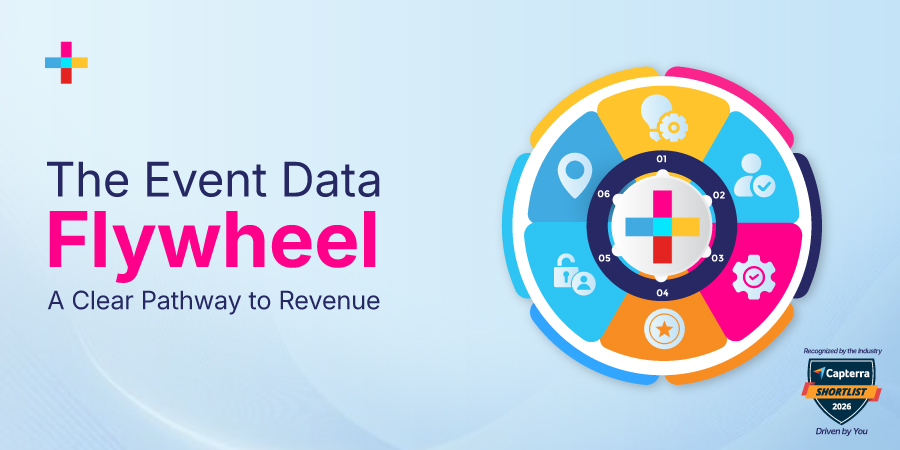
Event data becomes a revenue flywheel when insights from one event are reused to improve how the next event runs. Once data flows cleanly through the funnel, teams stop treating each event as a reset. The system shifts from reacting after the event to learning during and between events. Signals carry forward, feedback loops tighten, and outcomes improve without adding operational effort. This is where event data management turns events into an always-on revenue engine.
Establishing the Flywheel

The flywheel starts by deciding that no event data expires. Teams deliberately carry forward what performed well and bake it into the next execution.
Instead of rebuilding targeting, scoring, and nurture logic for every event, teams reuse proven inputs:
- High-intent firmographic profiles automatically seed the next event’s targeting.
- Session themes with strong engagement inform agenda planning.
- Engagement paths that drove pipeline become default nurture sequences.
This is an operational choice. Teams configure their systems so past performance becomes the starting point, not a reference deck. Setup time drops, and precision increases with each cycle.
Real-Time Scoring
In a flywheel model, scoring runs continuously and updates as data enters the system. Teams rely on live thresholds instead of static lists.
Registration, pre-event, and in-event signals update priority automatically:
- High-intent accounts surface immediately for action.
- Lower-intent profiles deprioritize without manual review.
- Sales queues refresh in real time based on behavior.
This changes how teams work day to day. There is no waiting for reports. Action happens when intent appears, keeping momentum intact.
Automated Routing
Routing is where teams remove friction entirely. Instead of deciding who goes where, they define rules once and let the system execute.
When intent crosses a threshold:
- High-intent attendees move directly into sales workflows.
- Mid-intent profiles receive targeted content paths.
- Low-intent records recycle into long-term nurture.
Teams no longer manage lists. They manage logic. Decisions are automatically executed based on behavior, not availability.
Post-Event Feedback Loop
In a mature flywheel, post-event data immediately feeds planning and qualification logic for the next cycle.
Teams use outcomes to refine the operating system:
- Closed-won accounts sharpen ICP definitions.
- Lost deals adjust qualification thresholds.
- High-CLV segments seed future event audiences.
This step is critical. Teams review outcomes not to summarize performance, but to update rules, scoring weights, and targeting inputs before the next event launches.
Continuous Optimization
Because the system learns from every interaction, performance improves even when effort stays flat.
Over time:
- Fewer low-fit registrations enter the funnel.
- Sales conversations start later but close faster.
- Attribution becomes clearer with each cycle.
This is how teams move events out of campaign mode and into operational infrastructure.
Autopilot Mechanism
Autopilot does not mean hands-off. It means teams stop repeating setup work.
Once configured:
- Scoring models persist across events.
- Integrations stay live.
- Workflows trigger based on behavior, not calendars.
Teams shift focus from managing execution to improving strategy. The system handles movement, prioritization, and follow-through. Results continue to compound without additional effort.
How to Measure Your Event Data
You measure event data by tracking how signals move, progress, and convert across the funnel while activity is still in motion. Once the flywheel is in place, measurement becomes a control system that allows you to adjust strategy in real time and reinforce what drives results. Strong measurement keeps the flywheel efficient and ensures event data continues to compound.
Signal Quality
Signal quality determines whether event data supports confident decisions. High-quality signals progress smoothly from early interest into qualified engagement. When registration and engagement data align with ICP criteria, teams gain clarity on where to focus effort and which profiles deserve deeper investment.
Funnel Flow
Funnel flow reveals how event data advances through each stage. Smooth transitions from awareness to registration, engagement, and sales readiness indicate alignment across systems. Disruptions highlight where messaging, timing, or handoffs need adjustment to maintain momentum.
Velocity Metrics
Velocity measures how quickly event data moves through the funnel. Faster progression from registration to engagement, and from engagement to sales action, reflects strong coordination and timely follow-up. Velocity helps teams prioritize actions that keep deals moving forward.
Pipeline Influence
Pipeline influence connects event engagement to revenue impact. Tracking how event touchpoints appear across opportunities shows how events support deal creation, acceleration, and expansion. This view positions events as contributors to revenue growth, not isolated campaigns.
Data Integrity
Data integrity ensures measurement remains reliable. Consistent identities, verified actions, and accurate timestamps maintain trust across teams. Clean data allows marketing, sales, and leadership to operate from the same view of performance.
Benchmarks
Benchmarks provide direction for improvement. Comparing conversion rates, velocity trends, and engagement depth across events highlights progress over time. These insights guide optimization without reducing performance to static scores.
Optimization Triggers
Measurement drives action when metrics connect directly to workflows. Engagement patterns inform nurture adjustments, sales routing, and content planning. This creates a continuous feedback loop where insights turn into improvements without manual effort.
How Event Data Improves Future Events and Revenue
Event data improves future events and revenue by turning past performance into clear inputs for smarter targeting, stronger execution, and more predictable outcomes. Each event’s data feeds the next, creating a system where event data management delivers exponential return over time.
Sharpen Audience Targeting
Historical registration and engagement data reveal which roles, industries, and account types progress furthest through the funnel. Feeding these profiles into audience selection before campaigns launch reduces low-fit traffic and improves conversion quality without increasing spend.
A critical shift is excluding segments that repeatedly register but never engage. Removing them early improves downstream velocity, reduces nurture overhead, and protects sales focus.
Agenda Optimization
Topics that drive sustained attendance, repeat views, and post-event interaction should earn priority. Sessions with low dwell time get retired in favor of formats that consistently attract high-intent profiles.
Aligning session themes to pipeline stages strengthens results. Awareness content belongs earlier in the journey. Solution-focused sessions attract buyers closer to decision, improving both attendee experience and sales readiness.
Timing and Cadence Control
Timestamp analysis helps teams adjust email cadence, session scheduling, and follow-up timing so outreach aligns with attendee behavior instead of fixed calendars.
When engagement softens in the days leading up to an event, targeted reminders or agenda highlights often restore momentum. Small timing adjustments deliver measurable lift without additional effort.
Budget Reallocation
Event data clarifies which sources drive registrations, which drive engagement, and which influence revenue. Shifting budget toward channels that produce sales-ready audiences improves outcomes and often reduces overall spend.
Channels that perform well at the top of the funnel frequently underperform at revenue stages. Data makes these gaps visible and actionable.
Sales Context Alignment
Past engagement patterns inform future conversations, giving reps context before contact begins. Accounts that engage deeply across multiple events convert faster when handled consistently. Event data surfaces these patterns and makes them repeatable across teams.
Improve Follow-Up Precision
Post-event follow-up performs best when it reflects actual behavior. Click paths, session attendance, and content consumption guide messaging. Generic follow-ups dilute impact. Data-driven follow-ups feel timely and relevant.
Over time, this raises response rates while reducing message volume.
Revenue Predictability
As event data accumulates, forecasting becomes more accurate. Clear relationships emerge between engagement depth and deal outcomes, allowing teams to estimate pipeline influence earlier.
This positions events as a predictable revenue contributor, not a variable expense.
Conclusion
When you capture, manage, and activate event data correctly, your events stop resetting after execution. They compound. Each interaction sharpens your targeting, improves engagement, and strengthens revenue outcomes across the funnel. What once lived in recap decks now feeds forecasting, sales alignment, and long-term growth planning. That is the real shift. You move from evaluating events on activity to trusting them as revenue infrastructure.
This level of control depends on disciplined event data management and a platform built to support it. When your data flows cleanly from first touch to closed deal, you make decisions faster, execution becomes lighter, and results become repeatable.
If you want to see how this works in practice, Eventcombo helps you centralize event data, automate workflows, and connect events directly to pipeline and revenue. Built for complete data integrity, security, and compliance with global standards. Book a demo to see how your events can operate as a continuous growth engine, not a one-off effort.